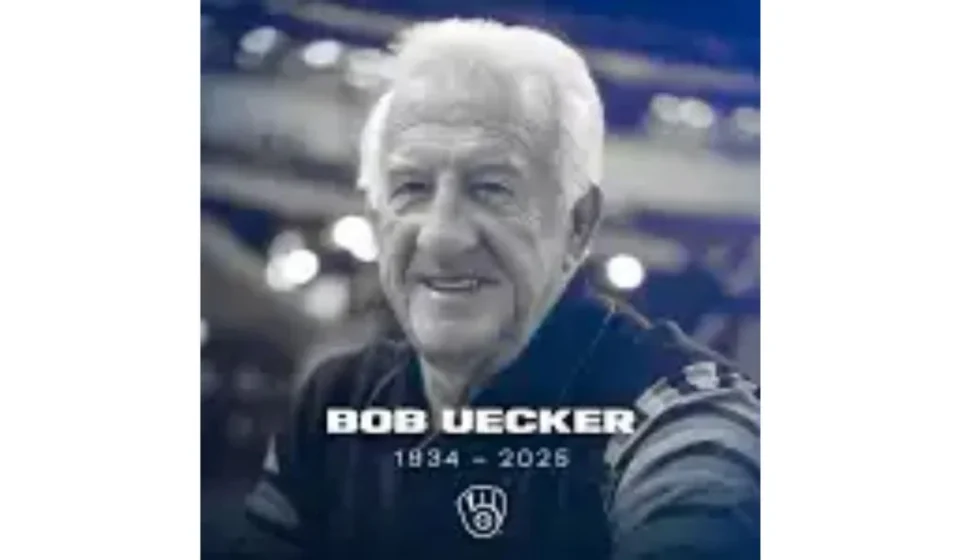

MILWAUKEE, WISCONSIN — Bob Uecker, the beloved voice of the Milwaukee Brewers and one of baseball’s most recognizable broadcasters, died on January 16, 2025, at the age of 90. His death marked the end of an extraordinary career that brought humor, warmth, and a distinctive storytelling style to generations of baseball fans.
Known affectionately as “Mr. Baseball,” Uecker spent more than five decades calling Brewers games. For listeners across Wisconsin and beyond, his voice became a familiar part of summer, accompanying countless games with sharp observations, self-deprecating jokes, and an unmistakable affection for the sport.
The Brewers announced his passing, sharing the grief of an organization and fan base that had come to regard him as much more than a broadcaster. His connection to Milwaukee baseball extended across generations, making him one of the most enduring figures in the franchise’s history.
Bob Uecker’s Cause of Death and Family
Uecker died at his home in Menomonee Falls, Wisconsin, following a battle with small cell lung cancer. His family disclosed that he had been living with the disease since early 2023, keeping much of his health struggle private.
The diagnosis added a deeply personal dimension to the loss for fans who had continued to associate Uecker with his trademark humor and enduring enthusiasm for baseball. Although he had spent years entertaining audiences with stories about the sport, he generally kept his private life away from the spotlight.
For his family, friends, colleagues, and longtime listeners, his death represented the loss of a man whose public personality was defined by humor but whose legacy rested on much more than comedy.
Uecker is survived by his longtime partner, Judy, and his children, Sue Ann and Bob Jr. While millions knew him through radio broadcasts and television appearances, those closest to him knew the person behind the microphone and the public persona.
His family’s loss was shared by Brewers fans who had welcomed his voice into their homes, cars, and daily routines for decades.
From Major League Catcher to Milwaukee’s Favorite Broadcaster
Born in Milwaukee on January 26, 1934, Uecker began his professional baseball career as a catcher. He made his major-league debut in 1962 and played for the Milwaukee Braves, Atlanta Braves, St. Louis Cardinals, and Philadelphia Phillies.
His playing career was relatively modest by major-league standards. He finished with a .200 batting average, but he was part of the St. Louis Cardinals team that won the World Series in 1964.
Rather than allowing his statistics to define him, Uecker turned his experiences as a player into material for the self-deprecating humor that later became his trademark. He was willing to laugh at his own shortcomings, and that willingness helped audiences connect with him.
In 1971, Uecker joined the Milwaukee Brewers’ broadcasting team. What began as a second career eventually became his defining contribution to baseball.
Over the following decades, his commentary combined play-by-play analysis with comic timing, memorable anecdotes, and an ability to make ordinary moments entertaining. He could describe a crucial play, poke fun at a disappointing inning, and tell a story that left listeners laughing—all without losing sight of the game.
His broadcasting career ultimately spanned 54 seasons with the Brewers, making him a constant presence through changes in players, managers, stadiums, and generations of supporters.
National Recognition and a Career Beyond Baseball
Uecker’s talent extended well beyond the radio booth. His frequent appearances on The Tonight Show Starring Johnny Carson introduced his humor to a national audience. His self-mocking delivery also made him a popular figure in Miller Lite advertising campaigns.
Television viewers knew him as George Owens on the sitcom Mr. Belvedere. Movie audiences remembered him as Harry Doyle, the fictional Cleveland Indians broadcaster in the Major League films. His portrayal of Doyle became one of his most recognizable screen roles, blending exaggerated sports commentary with the humor that defined his public image.
His achievements in broadcasting received one of baseball’s highest honors in 2003, when the National Baseball Hall of Fame presented him with the Ford C. Frick Award. The recognition acknowledged his lasting contribution to the sport through broadcasting.
Uecker also received recognition outside baseball, including induction into the WWE Hall of Fame. His popularity across different entertainment audiences demonstrated how effectively his humor traveled beyond the game that first made him famous.
A Lasting Legacy in Milwaukee
Despite his national fame, Uecker remained closely associated with Milwaukee and the Brewers. His voice became part of the city’s baseball identity, connecting fans to the team through winning seasons, rebuilding years, and unforgettable moments.
Supporters did not listen only for scores and statistics. They tuned in for his observations, stories, and personality. His ability to make fans laugh—even when the team was struggling—helped establish a relationship that went beyond the usual connection between a broadcaster and an audience.
Uecker’s legacy is preserved in the memories of those who heard him call games, watched his television appearances, or discovered his comedy through film. His work demonstrated that a great sports broadcaster can inform and entertain while making listeners feel as though they are sharing the experience with a familiar friend.
Bob Uecker’s death at 90 ended a remarkable chapter in Milwaukee sports history. Yet the laughter, stories, and memories he created will continue to accompany Brewers baseball. For generations of fans, “Mr. Baseball” will remain inseparable from the sound of summer at the ballpark.


